Noise Boys
Emma Savage and Ziggy Humberstone
We all can come to an awareness of the influence and power of images through two main forms: as manipulated forms of marketing, curation, and propaganda; and potential images as documentary and surveillance, in the form of the camera lens. Its possible use or aims live in the back of our minds as our reflexive voyeur. We are not only seeing, but being seen, and then being seen seeing, and our observed actions and reactions become capitalised on by both state and economy. A sense of panoptic unease creates a dissociated distance between us as actors and the objects and images we see. Confronting the 'Noise Boys’, we encounter two eloquent expressions of this unease.
Savage presents the video Copies projected onto the floor of the gallery, of a police helicopter -potentially- filming Auckland from above, while the artist is filming ‘back’ from the ground via a smartphone. This reflexive inversion of power, points to questions of the autonomy and democracy of filming and being filmed. Far away and noisy, the police helicopter reminds us of ever present surveillance, and its haunting of common technology. Savage reiterates this experience by using the ubiquitous phone camera, gaining some of that power back, but also reminding us of the many ways in which we are watched.
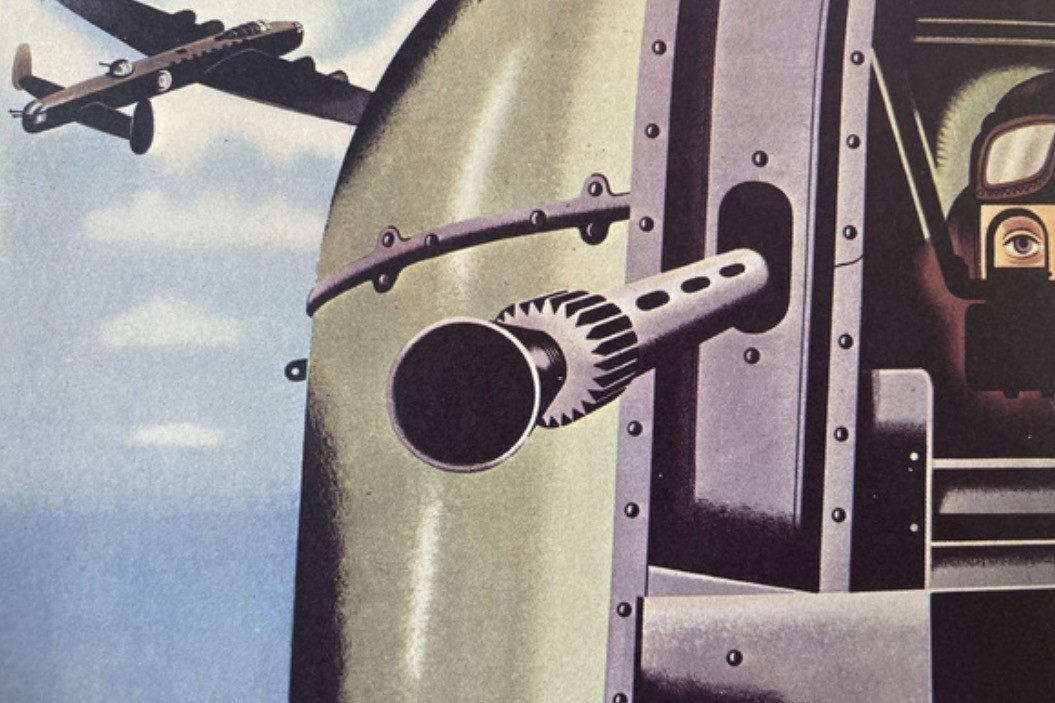
Humberstone installs the monumental painting Surrender inside the window glass box, pulling an uncanny composition from references to British World War II propaganda posters. The painting's lack of text leaves the image feeling unresolved, as with text, the image would become merely illustration. Through a surreal sense of placelessness, and arrangement of characters, Humberstone paints a theatrical stage of unease. Confronted by scale, without clear understanding or fulfillment, Surrender reveals the overwritten and illusory conclusions that propaganda attempts to provide.
In these contrasting references to past and present, and the forever presence of state military and police, Savage and Humberstone bring the noise’ of propaganda and surveillance to the gallery. In both works, we as the audience are filled by the same sense of unease over being watched, and the potential influence of images. A feeling that usually remains distant from us, the confrontation of the Noise Boys reminds us of lingering
anxieties about the use of images in systems of power.
Text by Ailsa Coulson
Emma Savage is an artist who lives in Tāmaki Makaurau. She uses video and performance to investigate the power dynamics of the local art world, universities, multinational corporations and governments. Central to her art practice is exploring embarrassment and shame—deeply personal yet universally felt emotions. These feelings surface when she exhibits art, making them both the subject and the consequence of her practice. She graduated with a BFA from Te Waka Tūhura Elam School of Fine Arts in 2025
Ziggy Humberstone is an artist from Waiuku who recently completed her BFA at Whitecliffe college. Informed by the ethos of reciprocity, Humberstone's practice is informed by the communities she moves through. Responding to ongoing modes of memory and visual introspection, she attests to how recollection is constructed through systems of permanence and unfamiliarity. Working across painting and found object assemblage, Humberstone engages speculative histories, domestic environments, digital archives, and suburban landscapes. Through her work she questions the function of these spaces through recollection and estrangement, intimacy and otherness. Humberstone is also the co-founder of the artist-run space Moat Gallery.